Do Overweight Pets Need to Go on a Diet?Three Key Directions for Pet Weight Management Supplement Development
By Jones Hsu, General Manager
Many people think a chubby pet looks cute—but do you know that those extra pounds can actually be a serious health burden?
Just like humans, obesity in pets can trigger various diseases. For middle-aged and senior cats and dogs, declining physical functions make it even harder for their joints to bear the extra weight. Over time, pain and discomfort can lead to reduced mobility, low mood, and even depression.
According to the Association for Pet Obesity Prevention (APOP), a 5 kg cat is roughly equivalent to an 80 kg adult woman in human terms!
Pet obesity is now one of the most common health issues, with 33–58% of cats and dogs classified as overweight. In Taiwan, a 2020 Pet Weight Management Survey by the American Pet Products Association found that over 57% of dogs and cats are at risk of being overweight.
So, how can we help pets maitain a healthy weight?What should we actually be feeding them?And for pet brand owners — how can you develop supplements and products that truly support weight management?
“It’s Just a Little Chubby… Right?” — The Real Impact of Pet Obesity
When it comes to weight management, owners play the most crucial role.
Many people think their round, plump pets look “cute” and mistake extra weight for good health — often ignoring early signs of obesity.
The most common causes of pet obesity include improper diet, too many treats, and lack of exercise — with diet being the biggest culprit.
Overfeeding, irregular meal schedules, and nutritionally unbalanced food choices all contribute to excess weight gain.
The challenge is that most owners don’t even realize their pets are overweight — making obesity one of the hardest issues to fix once it develops.
Health Risks of Obesity in Pets
When pets become overweight, it doesn’t just affect their appearance —
it shortens their lifespan, reduces their quality of life, and places tremendous stress on their joints and internal organs.
Overweight pets are more likely to suffer from stiffness and joint pain, making them reluctant to move —
which leads to less activity, further weight gain, and a vicious cycle of declining health.
Here are the five most common symptoms and risks associated with pet obesity:
-
Lethargy and reluctance to move
-
Difficulty breathing or panting after minimal activity
-
Increased risk of chronic diseases such as heart disease, arthritis, and urinary tract disorders
-
Higher surgical risks and longer recovery times after anesthesia
-
Increased complications during pregnancy
Just like in humans, pet obesity is not simply a cosmetic issue — it’s a health issue.
Helping pets maintain a healthy weight means giving them a longer, happier, and more active life.
How Do You Know If Your Pet Is Overweight?
You can’t judge whether a pet needs to lose weight simply by looking at its round belly — nor by the number on the scale.Weight alone doesn’t accurately determine whether a cat or dog is underweight, overweight, or at an ideal body condition.To properly assess this, you need to observe the pet’s body shape.
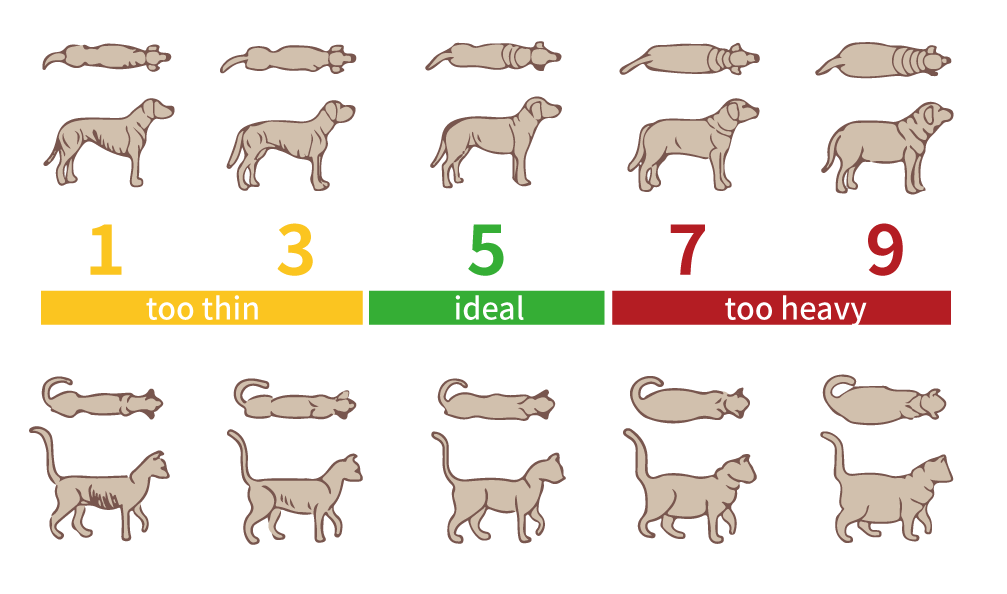
The World Small Animal Veterinary Association (WSAVA) developed an objective standard called the Body Condition Score System (BCS) — a visual and tactile method to evaluate whether a cat or dog’s body condition is healthy.Using this scoring system allows a more accurate assessment of a pet’s physical condition.
Typically, the BCS is divided into five levels:
the smaller the number, the thinner the pet — with Level 3 representing the ideal body condition.
An ideal body condition is characterized by:
-
A visible tuck-up of the abdomen when viewed from the side (the belly slopes upward toward the tail).
-
A waistline that can be seen from above, forming a gentle hourglass shape.
-
When you gently touch the ribs, you can feel them under a thin layer of fat —
but they should not be visibly protruding.
This visual-tactile method provides a simple and reliable way for owners — and brand developers — to understand pet body condition when creating or marketing weight management products.
However, it’s important to note that some breeds of cats and dogs naturally have more muscle mass — meaning they may look a bit chubby, but aren’t actually overweight.
The best way to assess body condition is by touch: if you can feel a thin layer of fat under the skin while still being able to feel the ribs, that’s considered an ideal body condition.
Why Do Pets Need Weight Management Supplements?
One of the main reasons pets become overweight is overfeeding by their owners.
Many owners, upon realizing their pet has gained weight, simply cut back on food — or worse, skip entire meals.
🚫 Don’t do this!
Starving pets doesn’t lead to healthy weight loss — it leads to nutrient deficiency and long-term health problems.
The first rule of weight management is simple: don’t let your pet go hungry.
Just like with humans, prevention is always easier than treatment, and a balanced diet is the foundation of sustainable weight control.
Below are two of the most common — and dangerous — mistakes pet owners make when trying to help their pets lose weight:
1. Extreme Dieting
While controlling calorie intake is fundamental, cutting essential nutrients is a major mistake.
Some owners drastically reduce portions or impose fasting periods, which can cause nutritional imbalances.
Over time, this can lead to fatigue, weak immunity, and even organ issues — especially in senior pets who already have slower metabolism.
2. Over-reliance on “Safe” Foods, Leading to Nutrient Imbalance
Feeding only low-fat or low-calorie foods such as sweet potatoes or chicken breast may seem healthy,
but it often causes an excess of single nutrients and a lack of others.
This can result in deficiencies in vitamins, minerals, and essential fatty acids — leading to dull coats, poor skin condition, and muscle weakness.
Just like people, pets benefit most from balanced nutrition and consistent portion control —
and this is exactly where pet weight management supplements come in:
they help maintain satiety, balance metabolism, and ensure pets get complete nutrition, even while reducing calorie intake.

Three Key Directions for Developing Pet Weight Management Supplements
For both humans and pets, maintaining a healthy weight starts with satiety—the feeling of fullness.
Adding dietary fiber is one of the most effective ways to help pets feel full and reduce overeating.
Fiber can be incorporated into a balanced daily diet or provided through functional supplements.
1. Regulating Satiety
Studies have shown that adding inulin and fructo-oligosaccharides (FOS) to pet diets can help suppress appetite and enhance feelings of fullness, leading to reduced voluntary food intake.
2. Reducing Fat Accumulation
Certain plant extracts, such as green tea extract and lycopene, can help inhibit fat deposition in the body, supporting weight management and overall metabolic balance.
3. Promoting Fat Metabolism
Ingredients like EPA and DHA from fish oil aid in fat breakdown and energy utilization while increasing the body’s basal metabolic rate.
To enhance product appeal, additional functional ingredients may also be incorporated—for example:
-
Probiotics to support gut health and digestion
-
Arginine to promote muscle vitality
-
Fish oil to maintain healthy skin and coat
FU-E: Your Partner in Pet Weight Management Product Development
With changes in modern lifestyles and environments, obesity in pets has become an increasingly serious issue that requires our collective attention.
As a professional pet supplement manufacturer, FU-E Biotech provides full-spectrum development support—from formulation design to production—ensuring every product is safe, palatable, and effective.
Maintaining an ideal weight helps prevent and manage many health problems linked to obesity or underweight conditions.
If you recognize the growing business opportunity in pet weight management, contact us today via phone, email, or LINE@.
Our team will work closely with you to develop a best-selling product that brings both health and happiness to pets everywhere.
References:
-
Bosch G, Verbrugghe A, Hesta M, Holst JJ, van der Poel AF, Janssens GP, Hendriks WH (2009). Effects of dietary fiber types on satiety-related hormones and voluntary food intake in dogs.
-
Bosch G, Gilbert M, Beerda B (2022). Food characteristics influencing appetite regulation in cats.
相關文章

2024 Pet Healthcare Market Trends: Development Ideas for Pet Brands

Taiwan Pet Supplement Development Blueprint: A Complete Guide from Formulation to Mass Production
